

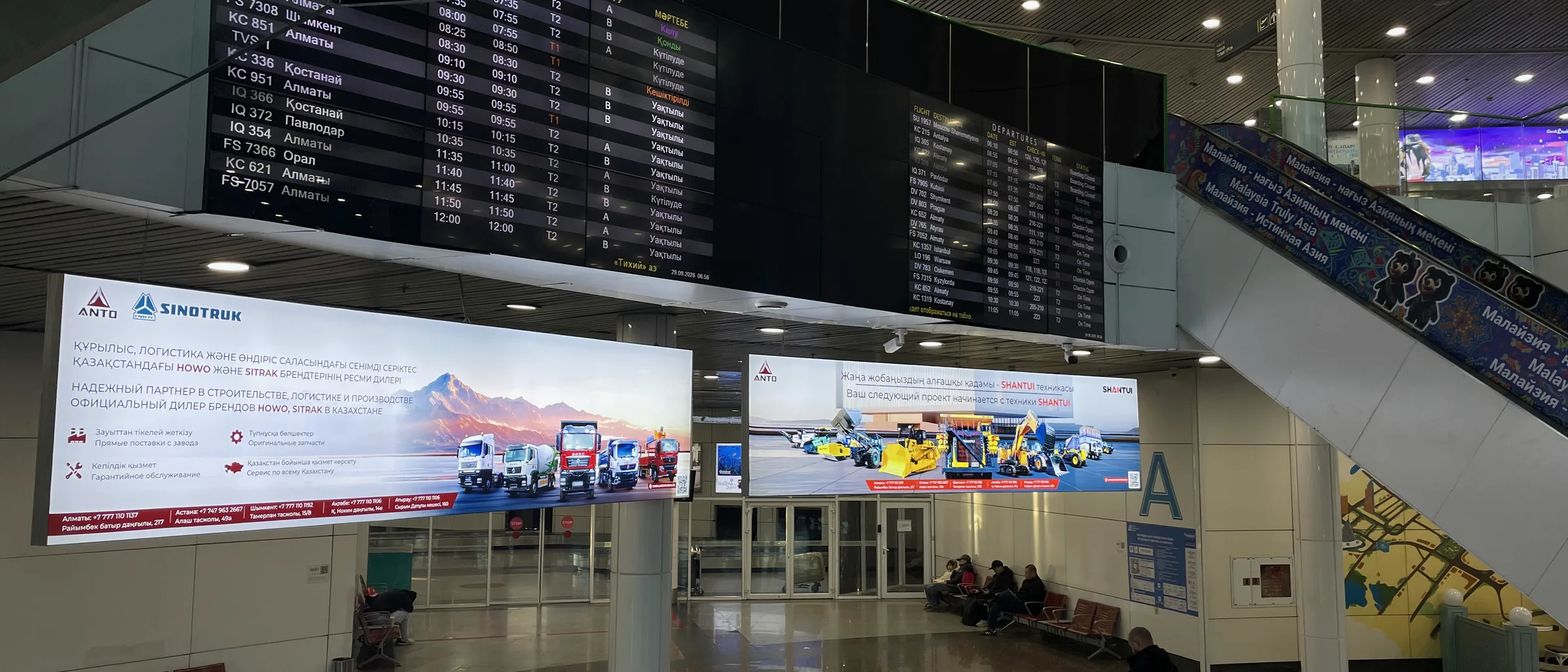
Case file · Record 01
An industrial equipment manufacturer, Kazakhstan.
This is one of our case files, written out in full so you can see the shape of what you receive. The client relationship is public; the client's name is withheld pending their clearance. The media mix and the figures are pending that client's clearance — which is the same rule we would apply to you.
- Client
- Withheld pending clearance
- Market
- Kazakhstan
- Objective
- Distributor recruitment, not consumer awareness
- Media mix
- Pending client clearance
- Dates
- Pending client clearance
- Figures
- Pending client clearance
They did not need to be famous. They needed three distributors to return a call.
The brief
The client was entering the Kazakh market with capital equipment. The instinct from the China side was a consumer-style launch: a wide city presence, a brand film, awareness metrics. That would have spent the budget impressing people who will never buy an industrial machine.
The actual constraint was distribution. Without local partners able to service and stock the product, no amount of awareness converts. So the brief we wrote back reframed the objective: reach a small number of specialist procurement decision-makers, and make the brand look credible enough standing next to established European competitors that a first meeting gets scheduled.
That reframing changed almost every decision that followed — including several where we recommended spending less.
- Primary audience — procurement and technical decision-makers at industrial distributors
- Secondary audience — existing end-users, for retention signalling
- Explicitly deprioritised — mass consumer awareness, which cannot convert without distribution
The channel mix goes in here once the client confirms it.
The plan
This section carries the full breakdown for the record: which channels were bought, in which cities, in which formats, and what job each one was doing.
We are leaving it out rather than describing it in vague terms. A channel mix is the most commercially sensitive part of a plan — it is the part a competitor can copy — and it belongs to the client, not to us. When the client confirms what may be published, it goes in here in full.
- Channels bought, with city, format and duration
- The role each channel was assigned, and how we judged whether it did that job
- What was considered and deliberately excluded, and why
What happened, and in what order
Execution
Language and compliance pre-check
Before anything was designed, we confirmed the labelling and language requirements that apply to this category — including how much Kazakh-language material is required alongside Russian. Finding this out after artwork is signed off is the single most common way a Central Asian campaign loses a month.
The specialist channels first
The channels that actually reach a procurement audience ran before anything aimed at a broader public. A specialist reader who sees a brand in their own channel and then notices it on a street forms a different impression than one who only sees the street.
The in-person touchpoint aligned to that first window
The one place this audience gathers in person was timed so that a conversation there could reference something the visitor had already read. Sequenced the other way round, the two spend the same money to cancel each other out.
The broader formats concentrated, not spread
Wider-reach formats ran concentrated around that same period rather than spread thin across the year. The aim was for a partner travelling into the city that month to see the brand repeatedly — not for the brand to be mildly present for twelve months.
Close-out
Site photography, schedule reconciliation against the purchase orders, and a written read-back. Delivered after the last placement came down, not on the last day of the flight.
This is the part most agencies skip.
The close-out report
The report for this project contains four sections, and every one of them is about what actually happened rather than what was planned.
First, the reconciled schedule: every line of the purchase order next to what was actually delivered, with a note wherever the two diverge and why. Second, dated photography of every executed location — if a site could not be photographed, it is not listed as delivered. Third, a short written read on which parts of the plan did the work the client needed and which did not. Fourth, what we would change on the next flight.
- Reconciled schedule — purchased versus delivered, with divergence notes
- Dated site photography — one per executed location, geo-tagged
- Read-back — assessed against the client's own KPIs, not ours
- Change list — what we would do differently next time
We are not going to invent a chart to fill this page.
You will have noticed there are no percentages on this page. That is not an oversight. The commercial figures for this project belong to the client, and until they clear them for publication we have no business printing them for our own marketing.
What we can do is show you the shape of the file and arrange the conversation. If this record is close to what you are planning, ask us and we will put you in touch with the client directly — they can decide what to tell you, and you get an answer from someone with no incentive to embellish it.
Request a reference call
Every case file looks like this one
Same structure, same four close-out sections, whatever the budget. Ask us for the record closest to your category and market.